
What Does "Show, Don't Tell" Actually Mean?
What people mean when they say, "Show, Don't Tell"

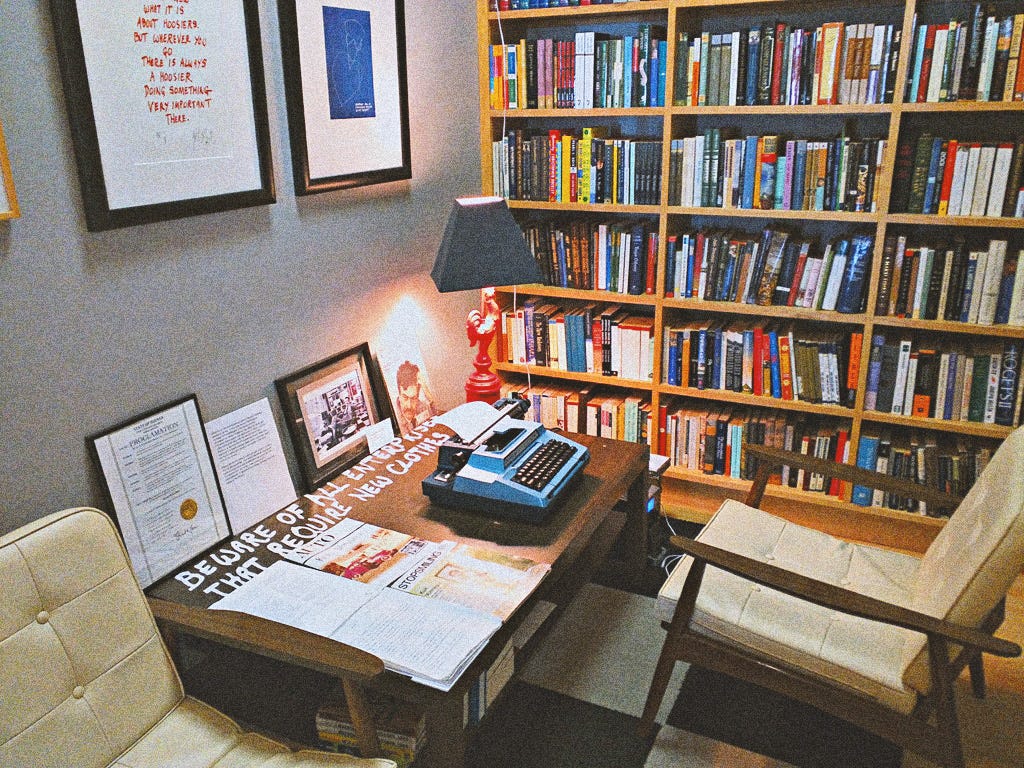
I remember when I attended an MFA program a few years ago, one of the professors said, “Your eyes and ears are the best teachers.”
By which he meant honing your ear for prosaic rhythm and examining why an author does a thing a specific way will teach you everything you’d want to know about how to write.
So, let’s tackle the most prominent piece of vague writing advice ever used: Show, Don’t Tell.
A lot of new writers, myself included, stare at that sentence and try to find some practical lesson in it, but don’t. It’s too vaporous. How, exactly, does one show and not tell?
I break this out into several practical directives, personally. There are many ways to show and not tell, in various instances. So covering all of them with the same blanket is impossible. Let’s just take one aspect: specificity.
Newer writers tend to struggle with saying what they mean or describing the thing in a way that sets the table for the reader to do the visual heavy lifting. Generally speaking, when a writer is specifically descriptive, they tend to show rather than tell.
Below the paywall, let’s look at a couple of examples of unspecific writing, how it fails to create the necessary image, and how, in the inverse, a great writer is intentional and specific with description.
And, because I’m a masochist, I’ll pull an excerpt of mine from 6 years ago and rewrite it,
